Universal Patented a Ride Seat Filled With Fluid That Molds Around You, Then Stiffens Before the Forces Hit
You sit down and sink into the seat. The ride starts, a field switches on, and the fluid inside that seat stiffens, so the shape it just took, your shape, becomes rigid bracing underneath you. The lap bar or harness is a separate part, and it stays.
That is the seat Universal City Studios patented this week.
U.S. Patent 12,703,284, "Systems and methods for adjusting a seat pan for a ride vehicle seat," was granted on Tuesday, August 11. The application behind it was filed back on December 19, 2023.
How it works
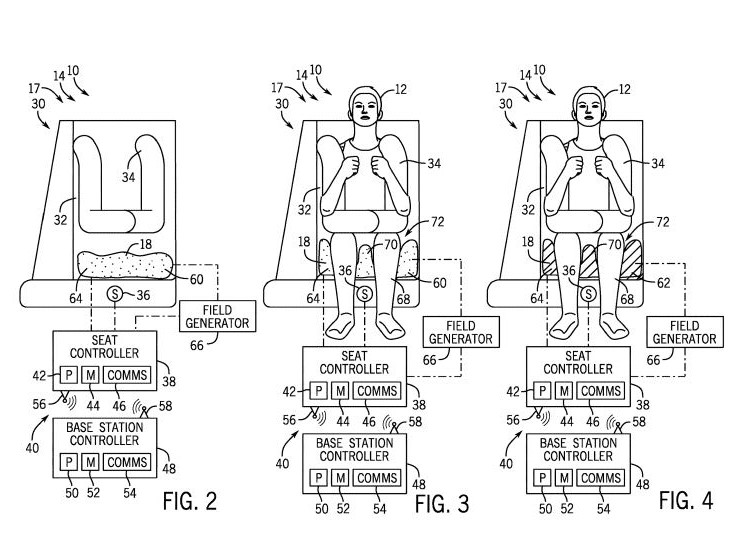
The seat pan is a flexible membrane wrapped around an internal volume of what the patent calls an active fluid. Two fluids get most of the attention: an electrorheological (ER) fluid, which thickens under an electric field, or a magnetorheological (MR) fluid, which thickens under a magnetic one. The filing also lists shape memory materials, piezoelectric materials and electroactive polymers as alternatives. All three of the patent's independent claims put something else in that fluid too, a deformable support, described as "a flexible polymer, an elastomer, a foam, a conformable metamaterial, a metal sponge, fibers, springs, or any combination thereof." It gives the pan a base shape and guides where the contours form. A field generator sits with the seat, driven by a seat controller, which the filing says may be dedicated to a single seat or may instead be one central controller running every seat in the vehicle. Above that sits a base station controller, which the filing says the system may either include or simply be coupled to, and which a ride operator can work by hand.
With no field applied, the fluid flows easily and the pan is in what the patent calls a soft state. The rider's weight displaces the fluid, so the membrane conforms "around the body of the passenger." As that fluid is displaced, a portion of the seat pan rises between the legs into what the filing repeatedly calls a pommel, and the pan hollows out where the legs, buttocks and back press into it, forming what the patent calls concavities.
Then the field comes on. The fluid resists flowing, the pan enters a firm state, and that pommel and those concavities lock in as rigid structure. The stated payoff is bracing and friction: the rider gets "more rigid lateral support for the body of the passenger," against leaning "to the left, right, front, and/or back," and the molded shape adds resistance against sliding even as the rider "experiences significant acceleration throughout the ride."
The firmness is not a simple on or off, either. The patent has the control system stiffening the pan when the vehicle is about to move or about to accelerate, "based on known or planned routes for the ride vehicle," and adjusting it again at features like "hard turns, loops," anywhere between the soft state, the firm state "and any stiffness value therebetween."
What the patent says it is for
The stated problem is that people are not all the same shape. "As will be appreciated, passengers of various ages, sizes, and proportions may wish to enjoy the ride experience," the filing reads, and the seat pan is described as "configured to closely conform to a wide variety of body types, shapes, and sizes."
One important limit: this is not a replacement for a lap bar. The patent describes the ride vehicle seat as having a seat back, a restraint system and the seat pan as three separate parts, and one sequence in the filing has the seat controller confirm the restraint system is "in an engaged position (e.g., lowered, buckled)" before anything stiffens. Attractions Magazine, which spotted the grant, notes that the filing "does not say the system would allow guests who currently cannot fit a particular restraint to ride."
Three more patents the same day
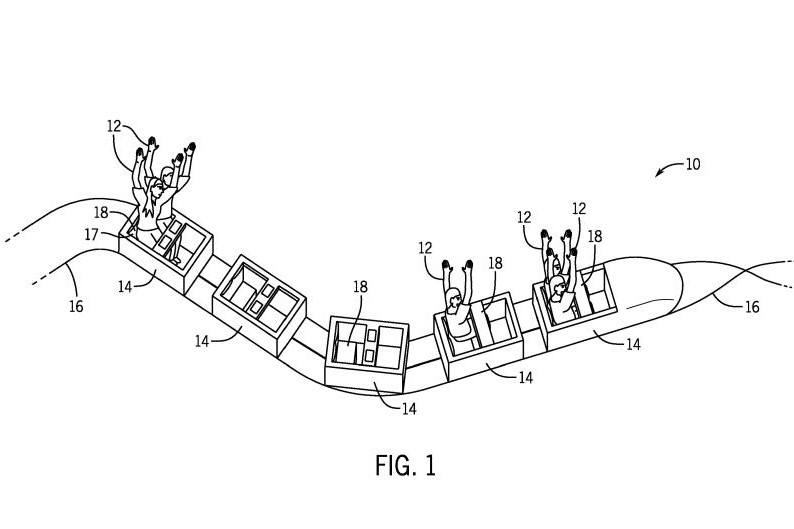
Attractions Magazine reports the seat was one of four patents granted to Universal City Studios on August 11. The others describe a ride vehicle that can switch between riding on a track mounted support and floating, a loading turntable whose track switches can divert a single vehicle onto a separate stretch of loading track for extra boarding time, while the rest of the ride keeps running, and an audio guide that identifies a landmark from a camera image by matching it against reference imagery, then generates narration for it with a large language model.
The usual caveat
A granted patent is a claim staked, not a ride under construction. Universal names no attraction, no park and no timeline anywhere in the filing, and a granted patent carries no commitment to build anything. This is also the second set of Universal ride technology patents we have written up in a week, after a water ride boat that steers itself surfaced last week.
Still, a seat that molds to the individual rider and then holds that mold is a notably different idea from a seat pan built to one fixed shape.
Sources
- U.S. Patent 12,703,284, "Systems and methods for adjusting a seat pan for a ride vehicle seat," assigned to Universal City Studios LLC
- Attractions Magazine, "Could Universal's next ride seat mold itself to your body?"
- Attractions Magazine, "Universal awarded four patents in one day for ride systems, adaptive seating and AI technology"
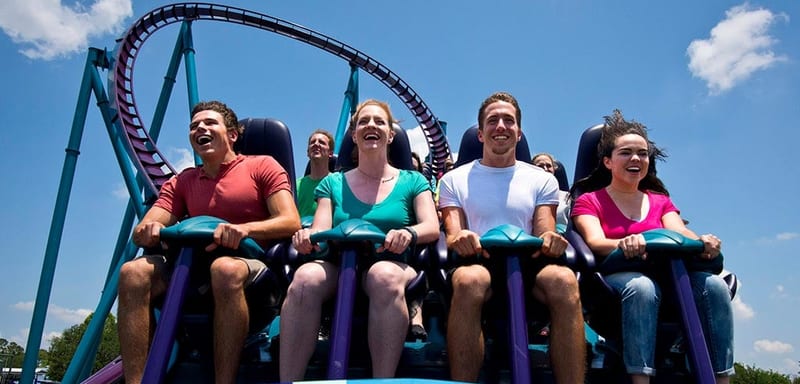
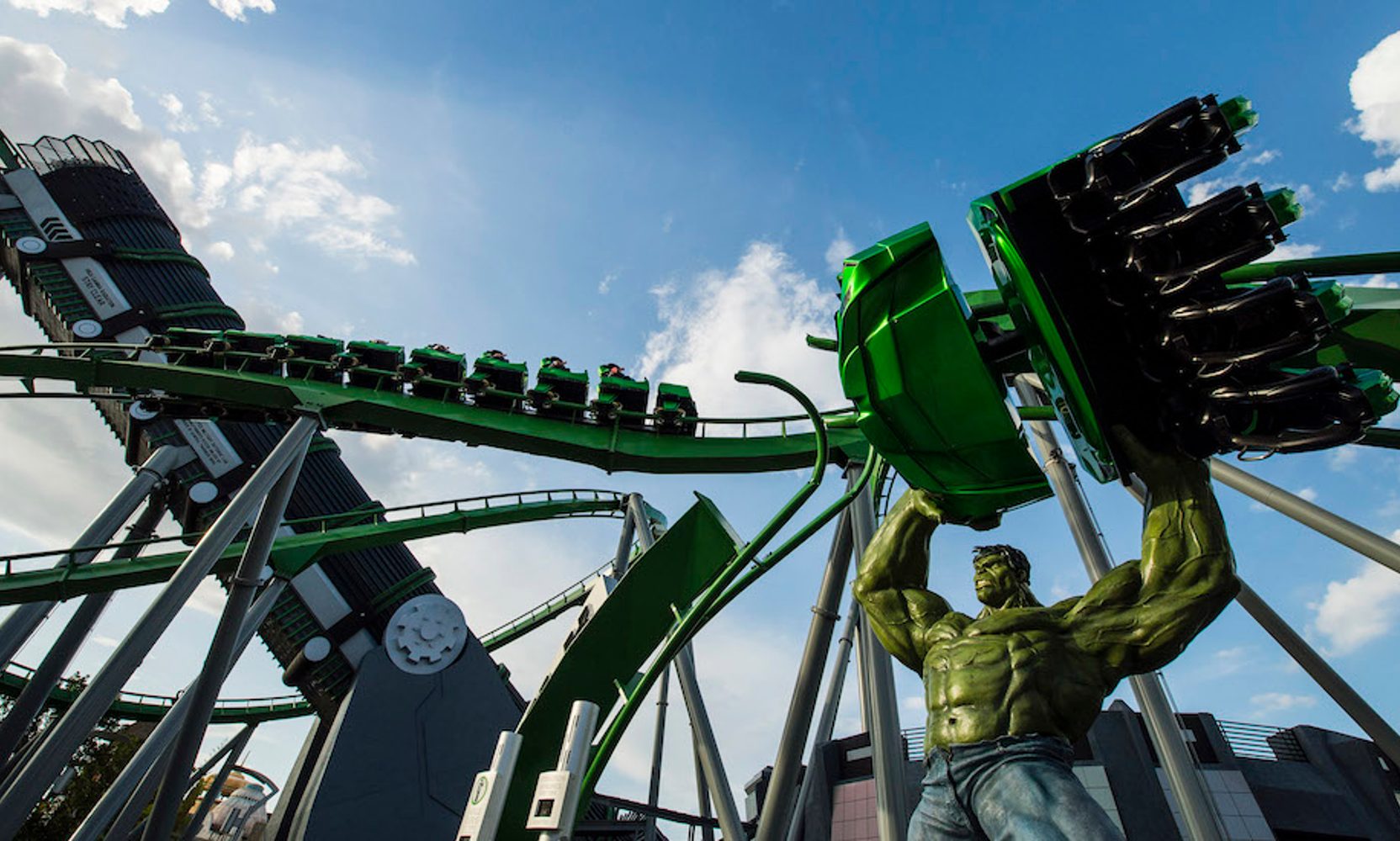
Image credits: Featured photo of The Incredible Hulk Coaster courtesy of Universal Orlando, via Attractions Magazine. It is a file photo of an existing ride and is not connected to the patent, which names no attraction. Patent drawings from the United States Patent and Trademark Office.